
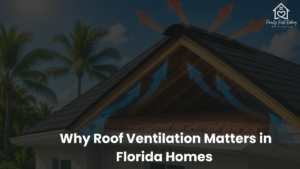
Most people never think about what’s happening in their attic on a July afternoon in Florida. Up there, without proper roof ventilation, temperatures can hit 160 degrees or higher. That heat doesn’t stay in the attic. It works its way down into your living space; it bakes your shingles from the inside out, and it runs your air conditioner into the ground trying to keep up.
It’s one of those things you don’t notice when it’s working right. You only notice when it isn’t.
Florida Heat Is a Different Animal
There’s hot, and then there’s Florida hot. The combination of intense sun, high humidity, and long summers puts roofs here under stress that most other states just don’t see. A roof ventilation system that works fine in Georgia or the Carolinas may not be nearly enough for a home in Jacksonville or Tampa.
The way ventilation works is pretty simple in concept. Cool air comes in through intake vents usually along the soffits at the bottom edge of the roof. Hot air rises and escapes through exhaust vents near the ridge at the top. When that cycle is working, heat moves through and out of the attic instead of sitting there cooking everything it touches.
When it’s not working when there aren’t enough vents, or they’re blocked, or the system is just undersized for the home, the heat builds. And it builds fast.
What Poor Ventilation Does to Your Cooling Costs
This is where homeowners feel it most directly. Right in the energy bill.
An overheated attic radiates heat down into the ceiling of your living space. Your air conditioner is already working hard in a Florida summer. Add a 150-degree attic above it, and you’re asking for a lot more of that system than it should have to handle. Cooling costs go up. The AC runs longer cycles. It wears out faster.
We’ve talked to homeowners who upgraded their roof ventilation and saw a meaningful drop in their monthly electric bills within the first summer. It doesn’t happen overnight, but the attic temperature difference is real, and so is the impact on what you’re paying to cool down the house.
Good ventilation isn’t an HVAC fix. It’s a roofing fix that makes your whole home more efficient.
Humidity Is the Other Half of the Problem
In Florida, it’s never just heat. It’s heat and humidity together, and that combination does things to a house that dry-climate homeowners never have to deal with.
Moisture gets into attic spaces. It comes from the living areas below; it seeps in through gaps, and in Florida’s climate it never really has a chance to dry out on its own without help. When humidity builds in an attic with poor roof ventilation, you get condensation on the wood, mold growth, and rot.
None of that happens fast. It happens slowly, quietly, over months and years. By the time you see the signs staining on the ceiling, a musty smell, soft spots in the decking, the damage is already done. Proper ventilation keeps air moving through the attic space, so moisture doesn’t get a chance to settle and cause problems.
How Ventilation Affects Roof Lifespan
Here’s something a lot of homeowners don’t connect until it’s explained to them. The condition of your attic directly affects how long your shingles last.
When heat bakes the underside of a roof deck for years without relief, it accelerates the breakdown of the shingles on top. Shingles that might last 20 to 25 years with good ventilation can start failing in 12 to 15 in a poorly ventilated attic. The granules break down faster. The material gets brittle. The roof ages from the inside out.
Roof lifespan isn’t just about what hits the roof from outside storms, UV exposure, debris. It’s also about what’s happening underneath. Proper roof ventilation is one of the best investments you can make in the long-term health of your roof, and it’s something that gets factored in when a professional does a full roof assessment.
What This Means for Insurance
This one surprise people. But it matters.
Some Florida insurers look at attic ventilation as part of evaluating a home’s roof condition. A properly ventilated attic shows that the home has been maintained and that the roof system was installed correctly. In some cases, poor ventilation and the moisture damage or premature aging it causes can complicate a claim.
If an adjuster finds evidence of long-term moisture damage or deterioration that could have been prevented with adequate ventilation, it opens the door to the same kind of arguments we see with deferred maintenance. It’s not the most common reason claims get denied, but it’s a real factor in Florida where humidity damage is something insurers understand well.
Insurance aside, proper ventilation just protects your investment. A roof that ages well and stays dry is a roof that doesn’t cause you expensive problems down the road.
Signs Your Ventilation Might Not Be Adequate
You don’t need to climb into the attic to get a sense of whether something’s off. A few signs are visible from inside the house or from a basic inspection.
If your upstairs rooms are noticeably hotter than the rest of the house in summer, that’s often an attic heat problem. If you notice your energy bills creeping without a clear explanation, the attic is worth checking. Dark staining on the underside of the roof deck, visible mold growth, or a strong musty smell in the attic are all signs that humidity is sitting where it shouldn’t.
On the exterior, look at the soffit vents. They should be unobstructed. Sometimes insulation gets pushed over them from the inside during an attic insulation job, which blocks the intake and quietly kills the ventilation system. It’s a common mistake and an easy fix but only if someone checks.
FAQ
- How do I know if my home has enough roof ventilation?
The general rule of thumb is one square foot of ventilation for every 150 square feet of attic floor space split evenly between intake at the soffits and exhaust near the ridge. In practice, the best way to know is to have a roofing professional assess the attic. They can check vent placement, measure airflow, and tell you whether what you have is actually doing the job for your specific home layout.
- Can poor roof ventilation actually raise my cooling costs?
Yes, and often by more than people expect. An attic that traps heat at 150 degrees or higher forces your air conditioning system to work harder to maintain indoor temperatures. Better ventilation lowers attic temperatures, reduces the heat load on your living space, and helps the AC run more efficiently. Homeowners in Florida sometimes see noticeable drops in summer energy bills after improving attic ventilation. - Does roof ventilation really affect how long my shingles last?
It does. Heat trapped in the attic bakes the underside of the roof deck and accelerates shingle deterioration from below. Even high-quality shingles will age faster in a poorly ventilated attic. Proper roof ventilation is one of the factors roofing manufacturers consider when specifying warranty conditions in some cases; inadequate ventilation can actually void a shingle warranty. - How does humidity damage a roof from the inside?
In Florida’s climate, moisture vapor moves into attic spaces from the living areas below and from outside air that gets in. Without adequate ventilation to move that air through and out, the humidity builds up. Over time it condenses on wood surfaces, which leads to mold, rot, and structural deterioration in the roof deck. You usually don’t see it happening until real damage has already been done. - Does roof ventilation affect homeowners’ insurance in Florida?
It can be a factor. Insurers and adjusters sometimes look at at attic conditions when evaluating claims, particularly when there’s evidence of moisture damage or premature aging. A well-ventilated attic is a sign of a properly maintained home, which generally works in your favor. Poor ventilation that leads to moisture damage or shortened roof lifespan can complicate claims in some situations.